
A major advance for research into neurodevelopmental disorders
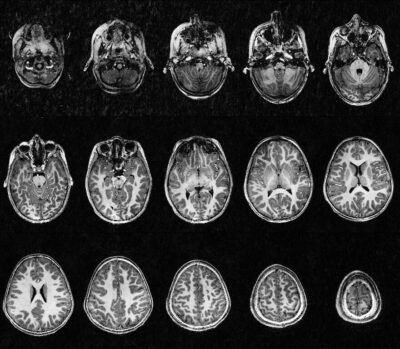
For the first time in France, images of a 6-year-old child's brain have been obtained using a 7 Tesla MRI scanner (IRM 7T) at NeuroSpin (CEA Joliot). This technological feat, achieved with the participation of the Institut Robert Debré du Cerveau de l'Enfant, marks a major advance in the study of the developing brain and neurodevelopmental disorders.
What is 7T MRI and why is it revolutionary?
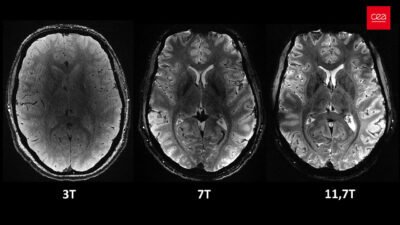
7 Tesla MRI is an ultra-high-field imaging technology that delivers far greater resolution and contrast than conventional MRI (1.5 or 3T), commonly used in hospitals.
This power makes it possible to :
- Visualize fine details of the brain that were previously invisible,
- Better detection of structural anomalies such as small cortical malformations or microscopic lesions,
- Study cerebral vascularization and metabolism with unprecedented precision,
- Explore brain activity on an individual scale, paving the way for more personalized medicine.
A world first in children
Until recently, this technology was reserved for adults, due to the technical and regulatory challenges involved in ensuring the safety of young patients. After several years of research and development, teams at CEA NeuroSpin have :
- Designed an MRI antenna adapted to children's morphology,
- Optimized protocols to reduce examination time (less than 6 minutes per sequence),
- Ensured full compliance with safety standards (fine modeling of SAR - Specific Absorption Rate),
- Obtained ANSM authorization for pediatric examinations at 7T.
Concrete applications for children with neurological disorders
7T MRI represents a unique opportunity to better understand and diagnose neurodevelopmental disorders, such as :
- Fetal alcohol spectrum disorders, often associated with specific damage to the cerebellum,
- Childhood epilepsy, some forms of which could benefit from curative surgery if the malformations are precisely localized,
- Autism Spectrum Disorders (ASD), ADHD, and other pathologies for which brain mechanisms are still only partially understood.
"7T MRI allows us to see what 3T MRI doesn't: micro-anomalies, fine vascularization, cerebral metabolism... This level of detail changes the way we understand and approach childhood pathologies."
Dr. David Germanaud, neuropediatrician and researcher at the Institut Robert Debré du Cerveau de l'Enfant.
Towards more individualized, predictive research
Beyond diagnosis, this breakthrough opens up new avenues for more detailed, individualized and predictive research on brain development, thanks to :
- Detailed exploration of connections between brain structures (gray and white matter),
- Longitudinal monitoring of each child's cognitive development,
- The identification of early biomarkers useful for prevention and intervention.
Excellence in collaborative research
This project is the fruit of an interdisciplinary collaboration between :
- CEA NeuroSpin engineers and physicists, specialized in ultra-high-field imaging,
- Doctors, neuropediatricians and researchers from the Institut Robert-Debré du Cerveau de l’Enfant,
- And the support of public health and research institutions.
"We wanted to offer children what research has already made possible for adults. It was a technological challenge, but today it's a reality, with every safety guarantee."
Vincent Gras, research engineer at NeuroSpin
One ambition: to transform the way children are cared for
Thanks to the 7T MRI, France has become a world leader in pediatric brain imaging. The Institut Robert-Debré is proud to be part of this breakthrough, with the ambition of :
- Improving care for children with neurodevelopmental difficulties,
- Accelerating translational research,
- And train a new generation of researchers and clinicians in cutting-edge neuroimaging.
For more information: https: //www.cea.fr/presse/Pages/actualites-communiques/sante-sciences-du-vivant/IRM-7T-chez-l%E2%80%99enfant-des-6-ans.aspx
Image credits: CEA/Neurospin