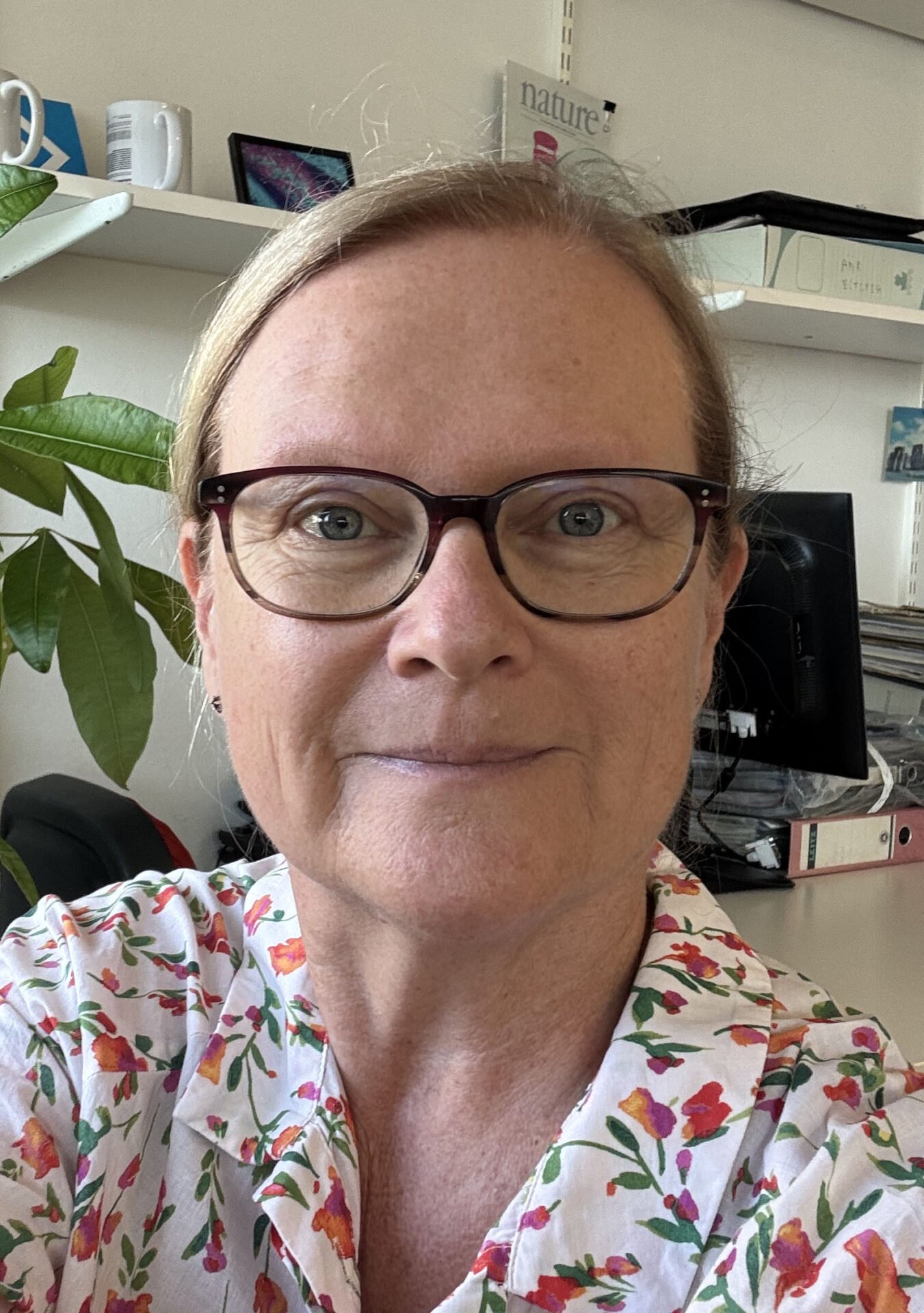
Fiona Francis, a neurobiologist and research director at the CNRS, will take over as director of the Institut Robert-Debré du Cerveau de l’Enfant effective October 1. She succeeds Ghislaine Dehaene as director of this IHU , which was created through a partnership among five founding institutions: the AP-HP, Université Paris Cité, Inserm, the CEA, and the Institut Pasteur.
An International Career
A native of the United Kingdom, Fiona Francis built her scientific career in biochemistry, neurogenetics, and genomics on an international scale—in the United Kingdom, the United States, Australia, and Germany—before moving to France and joining the CNRS in 2000.
A Distinguished Researcher
Among the first projects Fiona undertook during her Ph.D. in London was one that enabled her to isolate a mutated gene responsible for hypophosphatemic rickets, a disease that affects one in 20,000 people and is resistant to treatment with oral vitamin D. Her ten years working with Jamel Chelly at the Cochin Institute led her to characterize DCX, a key neuronal protein involved in human cortical development, and, in connection with this, to develop a mouse model of epilepsy.
She established her team at the Institut du Fer in Moulin (INSERM) in 2008, where she continued her research on abnormalities in neuronal migration, with the goal of identifying the molecular and cellular mechanisms underlying malformations of the cerebral cortex—the outer layer of the brain’s nervous tissue—during embryonic development. These serious abnormalities, which lead to intellectual disabilities, epilepsy, or sometimes autism spectrum disorders, stem from mechanisms that are still largely unknown.
After discovering and characterizing mutations in several genes in patients with these malformations, she and her team are now focused on understanding their consequences. To this end, she employs a multidisciplinary approach that draws in particular on cutting-edge molecular and cellular techniques, including imaging and in vitro or in vivo models that replicate these various disorders, as well as three-dimensional cultured human brain organoids.
His work and that of his team have shed light on key mechanisms of brain development—both healthy and pathological—with implications that extend beyond childhood epilepsy and intellectual developmental disorders to include autism and neurodevelopmental disorders.
His research has been recognized with Inserm Avenir funding, the Coup d’Elan Prize from the Bettencourt Schueller Foundation, and, more recently, the Brixham Foundation Prize awarded by the Foundation for Medical Research.
A Multi-Faceted Commitment
Fiona also heads the Scientific Interest Group (GIS) on Autism and Neurodevelopmental Disorders and chairs the Neural Networks Development Club.
His appointment as head of the ICE marks the continuation of a career entirely focused on understanding brain development and its disorders—which lies at the very heart of the institute’s mission.
Welcome, Fiona!